
Tree Stand Selling

I got in a tree stand for the first time in my life this fall. In Ohio, archery season started on September 29 this year. That allows for plenty of early season scouting and potential harvesting well before even the most eager buck starts to follow nature’s reproductive lure. It also allows for some very pleasant weather for those of us who decide to spend some time in assorted tree stands in hopes of catching the more active animals during this annual rite. 

As I said, this was my first time exploring this American past time. I have no objections to hunters, nor do I begrudge anyone who opposes the practice. To each his/her own. I’ve been on both sides of the fence on it, so I thought I’d give it a try to be as informed as I could be. Plus I figured I wouldn’t be skilled enough to take a shot anyway. 

I learned a lot about hunting. Like many things, (as in selling), there’s way more to it than most people would think. I’m an avid fisherman and every year I learn more and more about the things I didn’t even know I didn’t know. So this hunting stuff had me back at ground zero once again. I also learned a lot about myself. Hunting can be a quiet, deliberate, trying and lonely exercise. You might have deer all over your local landscape like we do, but they’re not all over it all the time. And when they are, the more “domesticated” suburban types aren’t nearly as jittery and mobile as their rural cousins. I can practically walk up and pet the deer who like to treat my hostas and fruit trees like their own personal cafeteria line. But out in the country, one whiff, one twig, or one abnormal sound will send these creatures scurrying for cover before you even know they’re there. And even if they are in sight, that doesn’t mean they’re in your sights. 

Plenty of hunting expeditions result in plenty of sightings and zero shots taken. If the shot’s not there, you just don’t take it. And that requires a lot of discipline and patience. And in today’s world, that can be a rare combination. It certainly can be for me. I spent 5 hours in the stand on my first day and I saw eight turkeys, one coyote, and two deer. The deer were deep in the woods about forty yards away and never came close to entering a “strike zone.” Still, after all that time of waiting and watching, the anticipation grows so much that any sighting of any animal musters up lots of adrenaline, and teaches you that your time will eventually come. 

It also teaches you how to sit quietly, pay attention, stay awake, and deal with the myriad of thoughts running through your mind. Your work, your family, your football team, (it was a Sunday), all come and go a lot more than the deer do. So sitting in that stand that day – and the multiple other days I went – provided me with a lot time to consider all of those important elements of my life. And as I have a tendency to do, I thought a lot about selling. 

Salespeople are like hunters or anglers. We’re trying to find the right place, (account), identify the best species, (customer), pick the right time, (prospecting), position ourselves and our lures correctly, (present our products and services), and bring them in, (close). We’re frequently tweaking our processes and making adjustments based on our experiences, the season, the “prey” and the landscape. And we should be. You can’t just wander into the woods and start shooting ammunition, and you can’t just walk into your prospect’s office and start shooting products and services. If there was a game warden for salespeople, we’d get our licenses revoked for irresponsible practices and we’d have to go through a re-certification process, (which we should all have to do anyway). 

So think about selling the way you might think about hunting or fishing. The similarities are everywhere. The more planning, strategizing, scouting and practicing we do, the more success we’ll have. And the great thing about selling: there are no limits. 
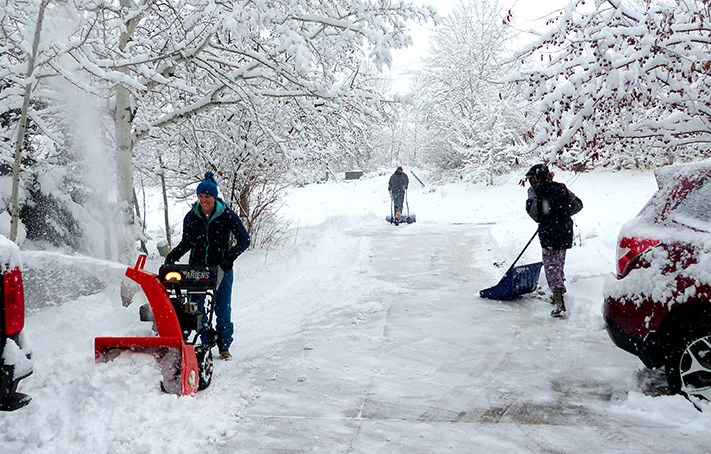
The Most Wonderful Time of the Year

It is for many others too, but it really is for those of us who make a living selling. When companies are coming down the “home stretch” of the fourth quarter of their business years, they are not only scrambling to achieve the goals and initiatives and objectives they set for the closing year, they are also strategizing about the new year as well. It is truly the best time to ask “business questions.”

We spend a lot of time and energy trying to ask “good questions” with our customers and prospects and they always sound better in person than in discussion or on paper. For example, it couldn’t sound less valuable to write down in a newsletter “How’s business?” But depending on the time of year, the nature of the conversation and the relationship one has with with the customer, “How’s business?” can be one of the most useful questions to ask. It’s just that it needs to be modified and rolled into the flow of the conversation.

If I’m calling on Rudy down in Louisiana, after we set the table with the standard conversation about the SEC dominating the college football landscape, I might say something like:

“Rudy, there are a lot of positive signs out there. The markets are doing pretty well, the banks are lending money and my buddies at John Deere are selling more construction equipment. How’s it been for you folks down here? Are you seeing good things in your industry? Are projects up? Is the phone ringing more? How’s it looking out there for you guys?”

I would never tell anybody to say anything I say or the way I say it. My goal is to offer you an example of something I would say and the way I would say it in hopes that when you read it out loud, you think there might be a framework of some sample language you might be able to use in crafting your own version.

Futuristically, I also like to use this time of year to look forward with customers to see if they are willing to share projects or initiatives that have already been established for the coming year:

Rudy, I’m sure you’re like a lot of folks I work with who start thinking about the next year as soon as July hits. Now that January has, what’s the message for 2018? Is there a particular emphasis being placed on certain markets, products, services or direction for the company or the sales force in particular? How do you see 2018 shaping up for you and the industry?

Even though I wrote that pretty much exactly like I would and have said it, when I read it back to myself, it sounds really corny and canned. It must sound even more corny and canned to you because you didn’t write it and likely wouldn’t say it. But I do say it pretty much just like that.

So don’t say what I say or even try to say it like I say it. But find a way to ask them about their business. It can be based on the economy, (good or bad is license to ask); their market place, (typically that means their competitors, pricing, lead times, suppliers, etc.); their customers’ markets, (what’s driving their trends / demands?); or any changes with their actual business strategies, (new products, M&A, regulatory challenges, etc.).

Keep in mind, no matter how well you craft it, or how many times you practice it alone or with a role play partner, it will sound a little scripted. They all do. But in the flow of the conversation, as you transition from “Howdy” to “How many you want,” you’ll be able to steer the conversation towards business. They expect you to talk about you and your business. They want you to talk about them and their business. And we can’t do that until they start talking about them and their business. So ask ‘em: “How’s business?” I bet that helps your business.

Here’s hoping your 2017 wrapped well and that 2018 starts even better.

Good asking…good selling!

Why Do They Buy?

Why did she buy that? Really, why? Why that? Why from that person? Why from that company?

Whether your customer/prospect buys something from you, or from somebody else, there is a reason why. There might be a reason “why not,” but for the sake of this article, we’re going to focus on the reasons why the person chose what she chose.

  1. Lowest price.  Fine. That means that none of the prospective sellers did a good enough job to create any representative value such that even the second least expensive option was chosen. Ouch.
  2. Only one in stock.  OK. (See above.)
  3. Because that’s what they’ve always bought. Super…if it’s ours.
  4. She believes the product itself is actually better. Might be. Might not be. But if she thinks/believes it is…done.
  5. She believes the overall solution is better. That’s not just the product, it’s the total presented solution.
  6. She likes the providing company better. Great. That’s not about product or price or availability.
  7. She likes the salesperson better. Perhaps the most challenging incumbent to displace.

Any other reasons that weren’t listed? No. Any other reason we could come up with likely fits into one of those 7. So let’s take the approach that we didn’t get the deal in any of those scenarios. Can we get the next one?

  1. Lowest price.  We can lower our price and get every order from now on. Until somebody goes lower.
  2. Only one in stock.  Got it. I’ve been telling the boss we need to ramp up our stocking program.
  3. Because that’s what they’ve always bought. This can be changed, but it’s going to take some work. You know, something like lowering our price and guaranteeing that it’s always in stock.
  4. She believes the product itself is actually better. This will take some work too, but surely we can show some data to prove that our commoditized product is truly superior to the incumbent commoditized product.
  5. She believes the overall solution is better. OK, we can improve our presentations and fact gathering so that the specific solution is more robust. (Try sprinkling in words like “robust.” That’ll impress ‘em.)
  6. She likes the providing company better. We can supplant them. They can’t do anything we can’t do. Our products and services are almost identical. But there’s something they do or have done that’s special to her, or saved her some time, or she thought nobody else could do.
  7. She likes the salesperson better. Perhaps the most challenging incumbent to displace. The incumbent sales professional may have created such great trust, credibility and rapport, that the customer just doesn’t believe anybody else could do it nearly as well. Does that exist? Absolutely. You’ve probably got a handful of those yourself. And in those places, you’re as locked in as is possible to be. But it’s rare. Most places fall in the #1 – #5 categories.

Think about it: think about why she bought what she bought, or from whom.

Another point of importance is that #1-#5 are specific to that particular transaction. #6 & #7 are about an overall, ongoing perception of an organization or person. Those are “relationship-based.” That’s why they are so challenging to displace. And they are also, very, very rare. Most of the deals we don’t get, are a result of less-than-convincing product/solution presentations combined with inadequate relationship status. Ouch. Yep. The truth hurts and the world of selling consists of a dynamic where, for many of us, more than half of our engagements are of that unsuccessful variety.  And that’s no fun. But having an open and honest awareness of how we are being perceived – and therefore received – is the critical first step of making incremental improvements.

The better job we do of putting ourselves and our company in the #6 & #7 positions with our customers, we’ll spend less time, energy and resources battling with everybody else scratching and clawing for the short-term, lo-profit #1 – #5 positions.

First blog post

Welcome to the Communication Performance Management Associates’ blog page. Thank you for coming. In this blog, it is our intent to offer thought-provoking content that aligns with the content we present in our workshops.

Let us know what you think.

Listen well.

Andy